
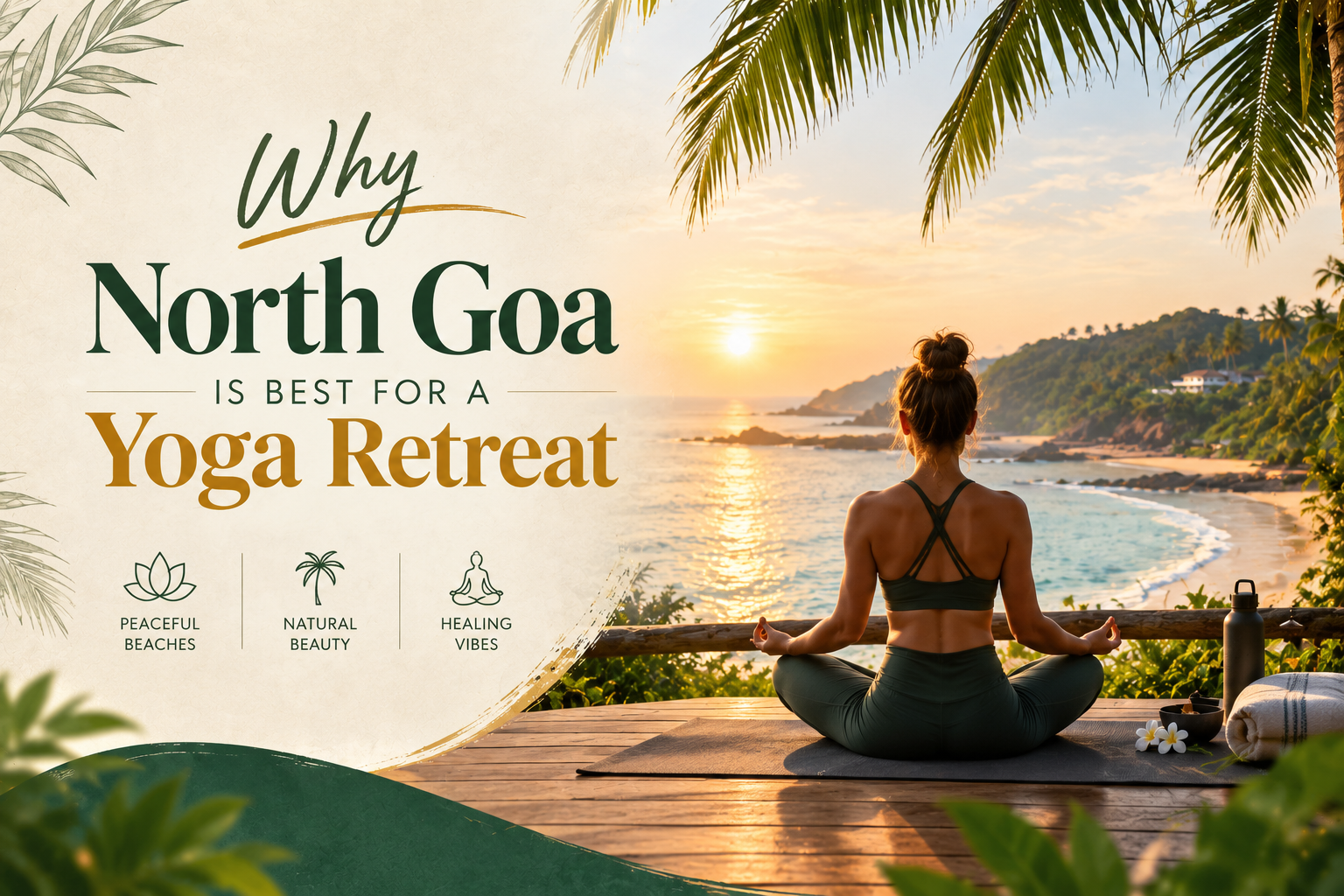
If you’ve typed “best place for a yoga retreat in India” into Google more than once, you’ve probably landed on the same debate: Rishikesh or Goa, and if Goa, then North or South. Here’s the short answer, and then the long one you actually came for: North Goa wins for most people because it gives you the ocean, the quiet, and a working yoga community in the same twenty-minute stretch of coastline, something almost nowhere else in India manages to do at once.
I’ve spent time in both halves of Goa, and the difference isn’t marketing spin. It’s geography, pace, and who else shows up.
North Goa vs. South Goa: The Real Difference
South Goa is beautiful, but it’s built for a different kind of traveller, resorts, longer stretches of untouched beach, more distance between villages. It suits people who want isolation.
North Goa, from Bardez down through the belt of Mandrem, Ashwem, Morjim, and Arambol, is built for immersion. The villages are small enough to walk end to end, close enough to cycle between, and layered with exactly the infrastructure a retreat needs: quiet guesthouses a few lanes back from the sand, small organic cafés that already cater to yoga travellers, Ayurvedic practitioners who’ve been treating the same community for years, and beaches calm enough for sunrise practice without a crowd.
This isn’t an accident. Yoga schools started settling into North Goa’s coastal villages years ago, and where teachers go, community follows, other teachers, therapists, musicians, cooks who understand a sattvic diet without being asked twice. You’re not retreating from Goa in North Goa. You’re retreating into a version of it that’s already been shaped around this exact practice.
The Villages That Make It Work
Mandrem and Ashwem — the quietest of the belt, known for their backwaters and a slower rhythm. This is where most serious retreats and teacher trainings are based, because there’s genuinely little to distract you.
Morjim — a little more established, still calm, with a strong expat and long-stay community that’s built up cafés and wellness spaces over the last decade.
Arambol — livelier, known for its drum circles and sunset crowds, better suited if you want your retreat days quiet but your evenings social.
Shreem Yogshala sits in what’s often called North Goa’s last village before the coastline turns wild, twenty meters from the sea, past the point where the beach shacks and tourist strip thin out. That distance matters more than it sounds like it should. It’s the difference between a retreat where the ocean is a backdrop in a photo and one where it’s the sound you fall asleep to and wake up to, every single day.
It’s Not Just the Beach — It’s What’s Built Around It
A yoga retreat lives or dies on what happens off the mat as much as on it. This is where North Goa quietly outperforms almost every other Indian destination:
- Ayurveda is not an add-on here, it’s a resident practice. Panchakarma therapists, herbal treatments, and sattvic kitchens exist because there’s enough demand to sustain them year-round, not just during peak season.
- Teachers stay long enough to build lineage. Because North Goa has become a genuine yoga hub rather than a stopover, many instructors have been teaching in the same villages for years. You’re learning from people embedded in a tradition, not passing through it.
- The pace resets you without forcing it. There’s no pressure to sightsee. Fishing boats, quiet lanes, and slow mornings do more for a nervous system than any itinerary could.
The Best Time to Go
North Goa’s yoga season runs roughly late October through March, when the monsoon has cleared, humidity drops, and mornings are cool enough for a 6 a.m. practice on the sand without breaking a sweat before you’ve even started. December and January are peak, book early if those are your months. If you want the same quiet villages with fewer people around, November and February are the sweet spot: full season, thinner crowds.
What an Actual Retreat Day Looks Like
Most North Goa retreats follow a rhythm that’s less “packed itinerary” and more “structured stillness”:
- Early practice (6:30–8 a.m.) — often asana or pranayama, timed to the sunrise over the water.
- Breakfast — sattvic, usually fruit, and something warm and simple.
- Late morning — philosophy, meditation, or an Ayurveda session, depending on the retreat’s focus.
- Free afternoon — swim, sleep, walk the village, get a massage. This unstructured block is often what people remember most.
- Evening practice — a slower, restorative session as the light drops.
- Dinner and quiet — most retreats wind down early. The point isn’t nightlife; it’s recovery.
If you’re choosing between retreats, ask specifically how much of the day is unstructured. A retreat that fills every hour isn’t giving you what North Goa is actually good for space.
How to Choose the Right Retreat in North Goa
A few questions worth asking before you book anything:
- How far from the sea is the venue, really? “Beachfront” gets used loosely. Ask for the actual distance.
- Who’s teaching, and how long have they taught in Goa? Longevity in one place usually means depth, not just a good Instagram feed.
- Is Ayurveda genuinely integrated, or is it a spa add-on? There’s a real difference between a therapist on call and a kitchen and treatment plan built around dosha-based principles.
- What’s the group size? Smaller groups mean more individual attention, especially if you’re newer to practice.
- Is it a pure retreat or does it run alongside a teacher training? Both can work, but they have different paces, a TTC cohort will be more structured and study-heavy than a standalone retreat.
If a 200-hour or 300-hour yoga teacher training in North Goa is on your radar rather than a shorter retreat, it’s worth reading up on what a full training actually involves before you commit, the daily structure and depth are considerably different from a week-long stay.
Frequently Asked Questions
Is North Goa better than South Goa for a yoga retreat?
For most people, yes, North Goa’s coastal villages have a denser, more established yoga and wellness community, quieter beaches near the retreat centres, and more variety in styles and durations without long travel between venues.
What is the best month for a yoga retreat in North Goa?
December through February offers the most reliable weather, cool mornings, no rain, calm seas, though November and early March give you the same conditions with smaller crowds.
Do I need prior yoga experience to join a retreat in North Goa?
No. Most retreats in the region, including multi-day programs and 200-hour trainings, are structured to welcome beginners alongside experienced practitioners, with modifications offered in daily practice.
How many days should a first yoga retreat in Goa be?
Five to seven days is usually enough to feel a genuine shift, long enough to settle into the rhythm, short enough to fit around most schedules. If you’re drawn to something deeper, a full teacher training runs closer to three to four weeks.
Is North Goa safe and comfortable for solo travellers attending a retreat?
Yes, particularly in the established retreat villages like Mandrem and Ashwem, where a steady flow of solo yoga travellers has shaped a genuinely welcoming, low-pressure community.
The Honest Case for North Goa
There’s no shortage of beautiful places to practice yoga in India. What North Goa offers that’s harder to find elsewhere is the combination, ocean, quiet, community, and a yoga culture old enough to have real roots instead of a retreat industry that showed up last season. If what you’re looking for is a place that holds the practice for you, rather than one you have to work to make peaceful, this stretch of coastline is worth the flight.
If you’re ready to see what a retreat here actually feels like, explore our upcoming yoga retreats and teacher trainings in North Goa or get in touch and we’ll help you find the right dates.