Most people who ask about a sound healing course ask the same three questions. What will I actually do all day? Is this a real skill or a passing trend? And can I teach it when I get home?
These are fair questions, and a brochure rarely answers them well. So here is a plain account of how a sound healing teacher training works, written for someone who is still deciding.
What sound healing is, and what it is not
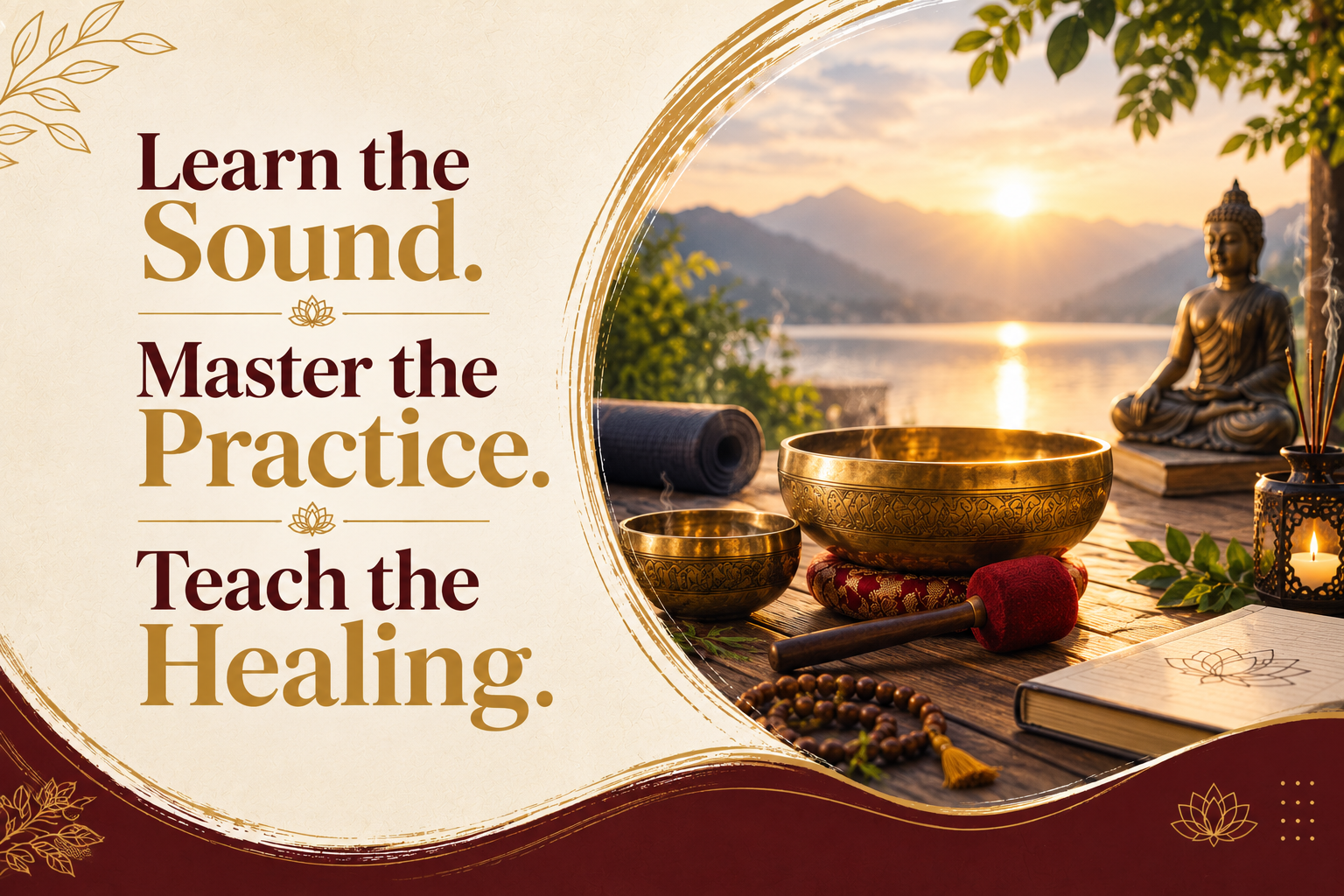
Sound healing is the guided use of instruments and the human voice to help people settle their nervous system, slow their breathing and rest deeply. The tools are usually singing bowls, a gong, tuning forks, chimes, drums and your own voice.
It helps to be honest about the claims. Small studies suggest that sound sessions can leave people feeling calmer and less tense. That is a good reason to practise it. It is not a reason to promise a cure for anyone. A responsible teacher offers sound as support for relaxation and wellbeing, and never as a replacement for medical care. If a course teaches you to say otherwise, walk away from it.
Where the yoga comes in
Sound is not a new add on to yoga. Nada yoga, the yoga of sound, is one of its older threads. It treats listening as a meditation practice in its own right. You do not need to believe in anything special to see the sense in it. When you follow a single long tone until it fades, your attention has nowhere to go except into the present moment.
This is why sound healing sits naturally beside pranayama and meditation. If you already teach yoga, you will notice how much of your existing skill carries over: holding a room, pacing a session, watching how people breathe.
What a training day tends to look like
Every school builds its own schedule, so treat this as a general picture and not a promise.
A typical day mixes four things.
Personal practice. You begin with your own breathwork or meditation. You cannot guide others into stillness if you have never sat in it yourself.
Instrument technique. This is slower than people expect. You learn how to strike a bowl so it opens gently instead of ringing sharply, how to rim it without forcing it, and how to build a gong wash from a whisper to a wave and back down. Most of the early learning is about touch and restraint.
Theory. You study how sound and rhythm affect attention and breathing, the basics of nada yoga, and how to sequence a session so it has a clear beginning, middle and end.
Practice teaching. You play for classmates, receive feedback, then lead a short session yourself. This is where the confidence grows. Playing for a friend is easy. Holding a group of strangers, some of whom fall asleep and some of whom cry, is a different skill.
Who it suits
This training tends to fit a few kinds of people well:
- Yoga teachers who want to add a quiet, restorative offering to their classes, especially alongside yin or yoga nidra.
- Therapists, counsellors and bodyworkers who want a calming tool for their existing sessions.
- Complete beginners who feel drawn to sound and are willing to practise daily.
- People who simply want a slower, deeper personal practice and have no plan to teach at all.
You do not need musical training. Many good practitioners cannot read a note. What matters more is that you can listen closely and stay unhurried.
Who might want to wait
It is only fair to say when this may not be the right time.
If you are looking for a fast way to earn income, know that sound healing is a slow build like any teaching work. If you are dealing with a serious health condition yourself, speak with your doctor and your teacher before an intensive training, because long periods of stillness and emotional release can be a lot. And if you dislike silence or find stillness uncomfortable, a shorter workshop first is a sensible way to test the water.
What you can teach after you finish
Graduates usually build their work in a few directions:
- Group sound baths, where people lie down and listen for 45 to 60 minutes.
- Sound added to yoga classes, most often in the final relaxation.
- Private sessions, one to one, tailored to the person in front of you.
- Workshops and events, such as full moon gatherings, retreats and corporate wellness sessions.
Before you offer paid sessions, check two practical points. Ask your school what certificate you receive and what it covers, and find out whether your local insurance provider covers sound healing work. These small checks protect you and your clients.
Why train by the sea in a quiet village
Sound work asks for silence, and silence is hard to find. Shreem Yogshala sits in the last village of North Goa, about 20 meters from the sea. Training somewhere with less traffic and less noise changes how you listen. After a week, you begin to hear the gap between one note ending and the next beginning, and that gap is a large part of what you will be teaching.
How to choose any sound healing training, including ours
Ask these questions of every school before you pay:
- Who is teaching, and how long have they practised and taught?
- How many hours are spent playing and teaching, compared with listening to lectures?
- How large are the groups?
- What will your certificate actually allow you to do?
- Is the school clear that sound supports wellbeing and does not treat illness?
A good school will answer all of these without hesitation.
Frequently asked questions
Do I need to be a yoga teacher first?
No. Some students already teach, and many do not. A regular personal practice helps more than a teaching qualification.
Will I own instruments afterward?
Many students buy their first bowl or set during or after training. Ask the school what you will need, and avoid buying before you have tried different instruments.
Is sound healing safe for everyone?
It is gentle for most people, but some, such as those with epilepsy, certain hearing conditions or a history of trauma, should speak with a professional first and tell the teacher before a session.
How is this different from a yin yoga training?
Yin works with long held shapes for the body’s deeper tissues. Sound works mainly through listening and breath. They complement each other well, which is why many students take both.