If you have never been to one, a sound healing session can be hard to picture. People hear words like gongs, singing bowls and vibrations, and wonder whether they will be asked to chant, sit cross legged for an hour or somehow “feel” something on cue.
The reality is much simpler. In most sessions you lie down, close your eyes and listen while a facilitator plays instruments around you. You do not have to do anything correctly. This guide walks through what happens before, during and after a sound healing session, so your first one feels familiar instead of mysterious.
Short answer: A sound healing session is a quiet, guided listening experience, usually 45 to 90 minutes long, where you rest on a mat while instruments such as singing bowls, gongs and chimes are played. It is a relaxation practice, not a medical treatment.
What is a sound healing session?
A sound healing session is a guided period of rest in which sound is used to help you slow down and turn your attention inward. The facilitator plays instruments in gentle waves, sometimes with long silences, and you simply listen.
The word “healing” can raise expectations, so it is worth being clear. Sound healing is a wellbeing and relaxation practice. It is not a cure for any illness, and a good facilitator will never promise one.
What instruments are used in a sound healing session?
Different facilitators use different tools. These are the most common ones you may meet.
Singing bowls
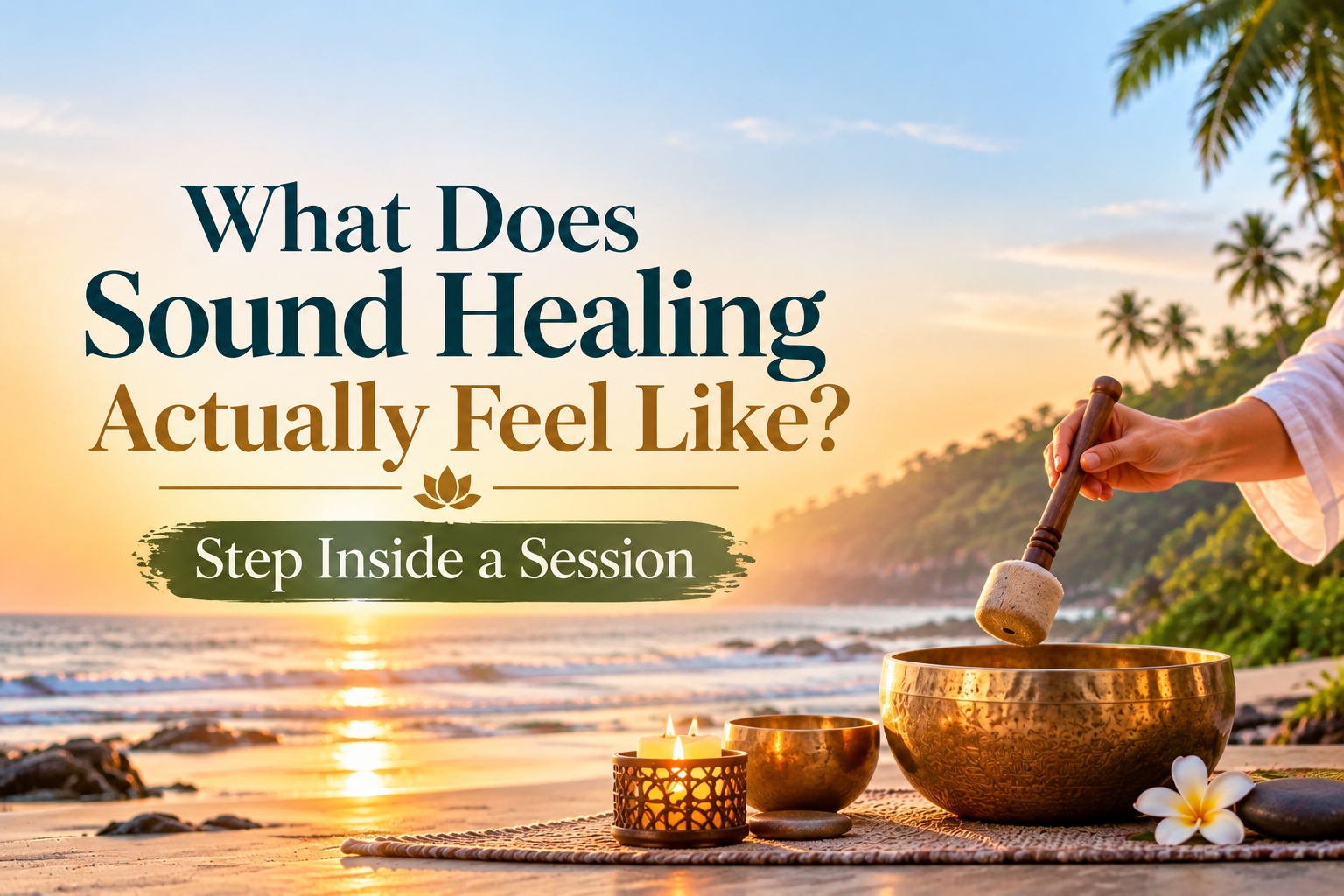
Metal or crystal bowls that produce a long, sustained tone when struck or rubbed with a mallet. They are often the heart of a session, and the sound can feel like it fills the room.
Gongs
Large gongs create deep, rolling sound that builds and fades. They can be quite powerful, so a good facilitator starts softly and builds gradually.
Chimes and bells
Smaller instruments that add light, shimmering sound, often used to open or close a session.
Tuning forks
Metal forks that are tapped and held near the body or the ears. Not every session uses them.
Voice and other instruments
Some sessions include humming, soft chanting, a shruti box, drums or a harmonium. None of these should require you to join in.
What happens before a sound healing session?
A little preparation helps you settle in faster. Here is what usually happens at the start.
- Arrival and settling. You arrive a few minutes early, find a spot and get comfortable.
- A short introduction. The facilitator explains what will happen and invites questions.
- Setting up your space. You lie on a mat, often with a blanket and a bolster or pillow under the head or knees.
- A moment to share concerns. If you are pregnant, have a medical device, are sensitive to loud sound or have anything else you would like the facilitator to know, this is the time to say so.
Tips for your first time:
- Wear loose, comfortable clothing.
- Avoid a heavy meal just before.
- Switch off your phone or keep it on silent.
- Bring a light layer, because the body cools when it rests.
- Arrive without expectations. There is no right way to experience it.
What happens during a sound healing session?
A typical sound healing session unfolds in a few stages:
- Settling the body. The facilitator may guide a few slow breaths or a short body scan to help you relax.
- Soft opening sounds. Gentle chimes or bowls invite your attention into the room.
- Building the sound. Instruments are played in waves, sometimes layered, sometimes sparse. Gongs may rise and fall.
- Spaces of silence. Quiet gaps are part of the design, not mistakes. Many people find these moments the most noticeable.
- Gradual closing. The sound softens, and the facilitator brings you back with light chimes or a slow cue.
You are free to adjust at any time. If you are uncomfortable, you can open your eyes, shift position, cover your ears slightly or ask the facilitator to lower the volume.
What does a sound healing session feel like?
Experiences vary widely, and all of them are normal. People commonly describe:
- Deep relaxation or heaviness in the body.
- A sense of calm, or of the mind slowing down.
- Light drifting between waking and sleeping.
- Vibrations or tingling, especially near a gong or bowl.
- Memories, emotions or tears coming up unexpectedly.
- Very little, apart from pleasant rest.
If you feel nothing special, you have not done it wrong. Some people simply enjoy the quiet, and some fall asleep.
How long does a sound healing session last?
Most sessions last between 45 and 90 minutes. Shorter sessions of around 30 minutes exist, and longer ones can run for two hours or more, especially in retreats. For a first time, 45 to 60 minutes is usually enough.
What happens after a sound healing session?
The end of a session is as important as the middle. A good facilitator will not rush you.
- Rest for a few minutes. Stay lying down until you feel ready to move.
- Move slowly. Roll to one side before sitting up.
- Drink water. A glass of water or tea helps you re-settle.
- Notice how you feel. Some people feel calm, some sleepy, some a little emotional.
- Plan a gentle evening. If you can, avoid rushing into a stressful task straight away.
Many people feel relaxed afterwards. Others feel nothing dramatic. Both are fine.
Does sound healing really work? What the research says
This is a fair question, and it deserves an honest answer. Some small studies have reported that listening to singing bowls or similar sounds may be linked to lower tension and improved mood. However, the research is limited, studies are often small, and results vary from person to person.
What we can say with confidence is that quiet, guided rest is valuable. A sound healing session gives you permission to stop, breathe and listen, and many people find that restful in itself.
Sound healing should not replace medical care. If you live with a health condition, please keep working with your doctor, and treat sound healing as a complement, not a cure.
Who should be careful or check with a doctor first?
Most healthy adults can enjoy a sound healing session comfortably. Please speak to a doctor or the facilitator first if any of these apply:
- You are pregnant.
- You have a pacemaker or other implanted medical device, especially if tuning forks or strong vibration will be used near the body.
- You have epilepsy or a history of seizures.
- You have tinnitus or are very sensitive to loud sound.
- You are living with trauma or strong anxiety, and closed eye stillness can feel uncomfortable.
If you feel uneasy at any point, you can open your eyes, sit up or leave the room.
Learning sound healing for yourself
Some people try a sound healing session once and find they want to learn how to hold that space for others. If that sounds like you, our sound healing course introduces the instruments, the thinking behind them and how to guide a calm, safe session.
If you already practise yoga, you may like to see how sound pairs with slow, restorative movement. Our Yin with Sound Healing training combines long, quiet Yin holds with sound, which is a natural fit for people who enjoy stillness.
Frequently Asked Questions
What should I wear to a sound healing session?
Loose, comfortable clothing that lets you lie still. Bring a light layer or blanket in case you feel cool.
Do I need experience to attend a sound healing session?
No. Beginners are welcome, and you do not need any yoga or meditation background.
Do I have to do anything during a session?
No. Your only job is to lie down and listen. You can move, adjust or open your eyes whenever you need to.
Is it okay to fall asleep during a sound healing session?
Yes. It is very common, especially if you are tired. Many facilitators say it is a sign that your body needed rest.
Is sound healing the same as meditation?
Not exactly. Meditation usually asks you to guide your own attention, while a sound healing session lets the sound guide you. They overlap in feeling, but they work differently.
Can I eat before a sound healing session?
A light snack is fine. A heavy meal can make lying still uncomfortable, so try to leave a couple of hours.
How often should I attend?
There is no rule. Some people go once to try it, others attend weekly or monthly. Choose a rhythm that feels good.
Is sound healing safe?
For most healthy adults, yes. Check with a doctor first if you are pregnant, have an implanted device, have epilepsy or are very sensitive to sound.
Final thoughts
A sound healing session is a simple idea: lie down, listen and let yourself rest. You do not have to believe anything, perform anything or feel anything special. For many people, the real value is the chance to be still for an hour in a world that rarely allows it.
If you are curious, go in with an open mind and no expectations. Tell the facilitator about any concerns, move at your own pace, and see how it feels.